
Incident Studio & Application Module Overhaul
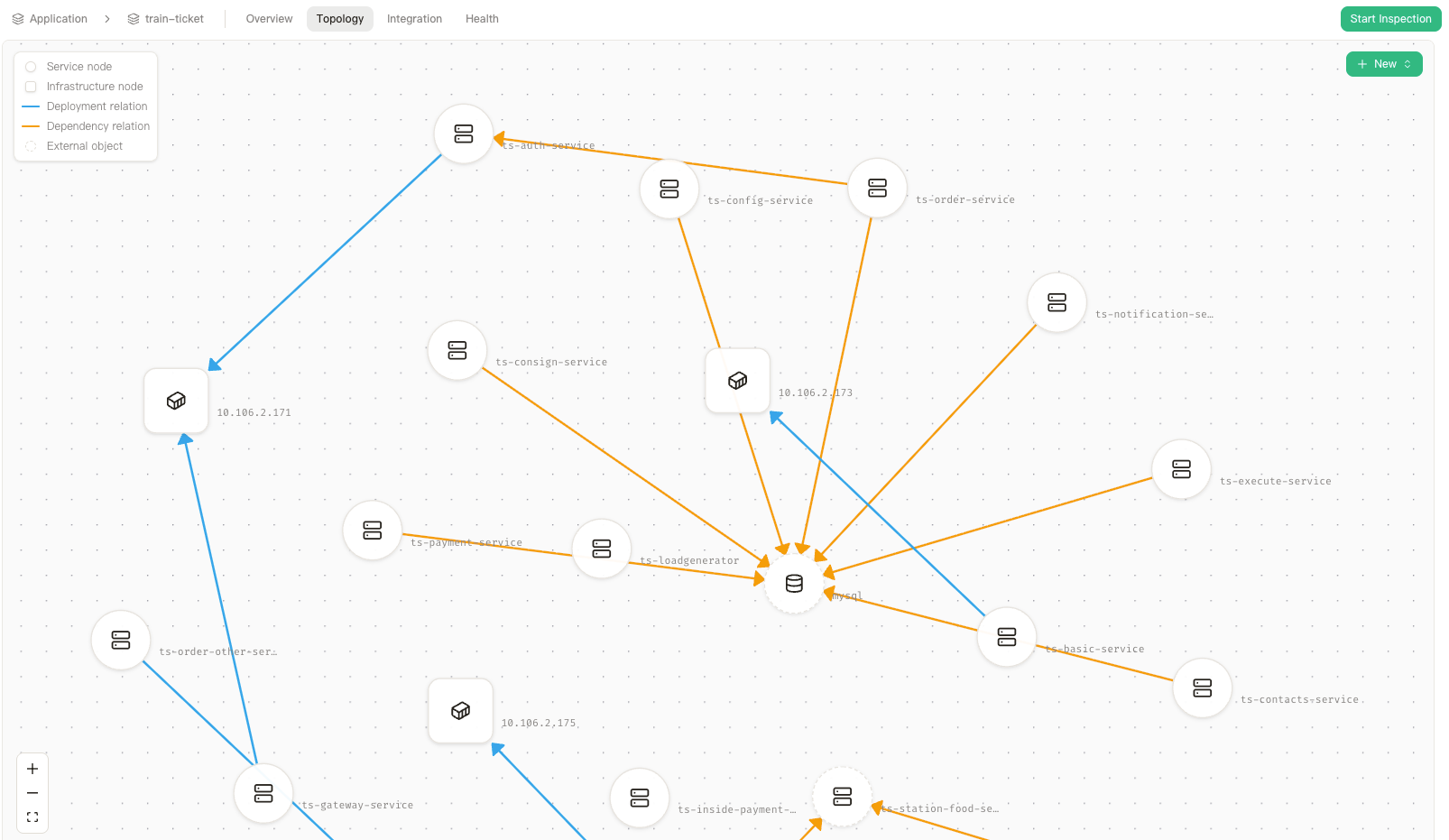
New Feature: Incident Studio & Application Module Overhaul
The all-new Incident Studio module is now live, providing a dedicated workspace for event-driven investigation and collaboration workflows. Tasks can now be assigned to a specific Studio at creation time, orthogonal to Application, current mode, and trigger mode — enabling finer-grained task ownership and context isolation. Incident Studio offers an event-centric investigation view, aggregating alerts, logs, and change events into a unified incident timeline to help teams rapidly identify root causes. Compared with the previous approach of scattering investigation entry points across modules, Studio centralizes relevant context and reduces information fragmentation from cross-module switching.
Application Module Overhaul
The Application module has been comprehensively redesigned around core user journeys. Entry points, key nodes, and state transitions have been restructured with optimized information architecture and interaction paths to reduce friction. This release also introduces health inspection capabilities — create and execute health inspection tasks directly from the application page with a 30-day health status trend display. A dedicated health inspection mode has been added to the new task page. After execution, one-click automation creation and binding to the current application is supported, seamlessly turning inspection results into continuous monitoring strategies.
Full Release Checklist
feat
- Unified the AI input component across all conversation entry points with task type, application, connector, and agent node configuration.
- Added task type switching with three modes — General, Hypothesis Driven Investigation, and Data Explore — each with dedicated tools and extended data structures.
- Unified the plugin module architecture by consolidating connection configs, tools, skills, knowledge, channels, event subscriptions, automation templates, and context sync into a single plugin system.
- Migrated 22 plugins to the new architecture and added resource sync capabilities for K8s, Zabbix, Tempo, SkyWalking, and TouShiBao.
- Migrated communication channels to the plugin system with installation status management.
- Added Kunlun Liantong self-hosted AIOPS platform as a messaging channel integration, managed via Feature Flags.
- Injecting Application profile into the General Graph as global context upon application selection, replacing the previous entity profile.
- Unified Automation execution into GeneralChatGraph with application_id and trigger_type support.
bugfix
- Fixed RCA Studio diagnosis navigating to a blank chat session on first load, requiring manual refresh to render content.
- Improved application list empty state with a full-page onboarding guide including module description and a create application entry point.
- Fixed multiple Application module interaction issues: creation dialog consistency with other entities, "belonging application" column display in lists, and unified detail/edit styling for deployment and dependency relations.
- Reverted entity uniqueness validation to its original scope to fix broken @mention functionality in chat sessions.